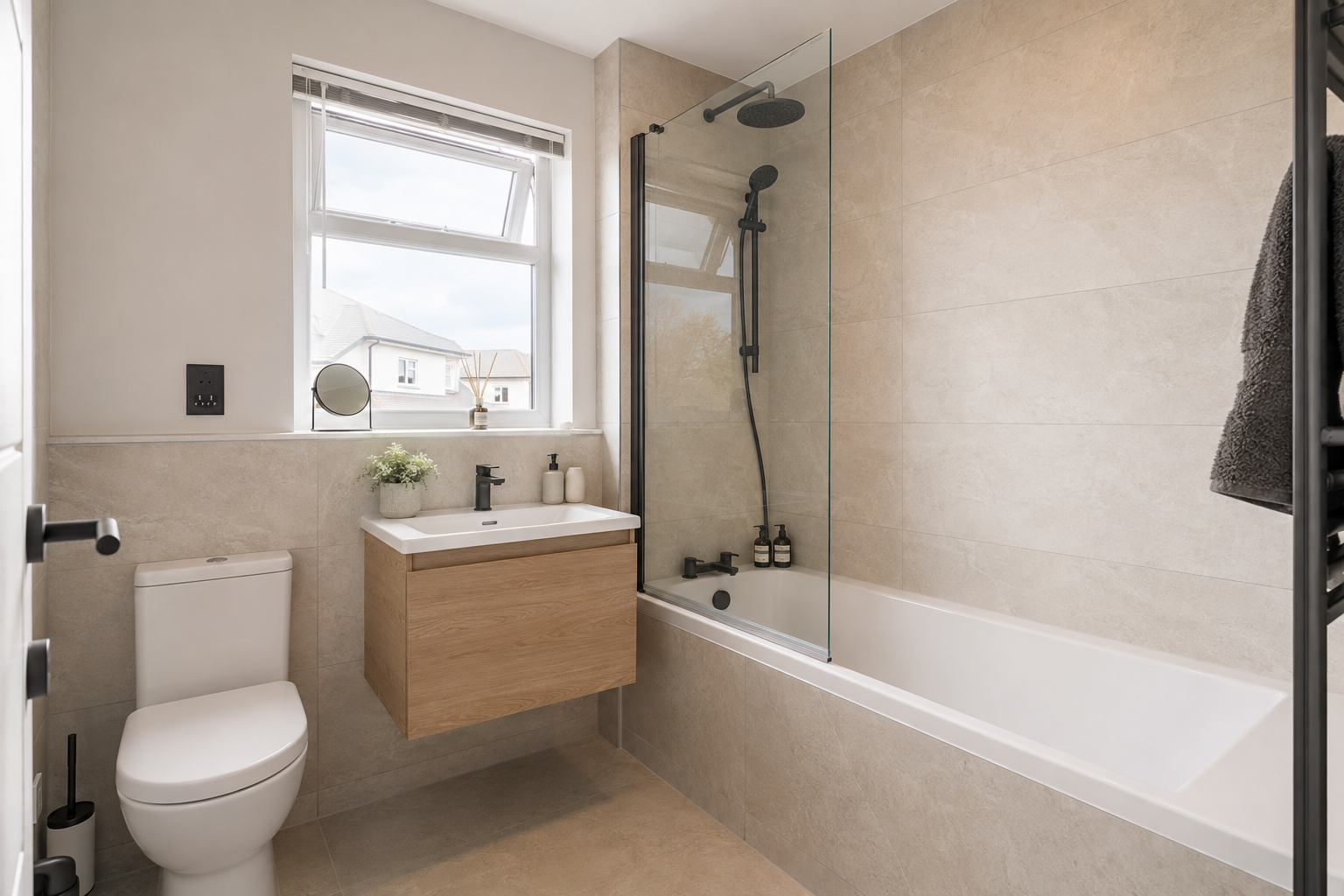
Compare waterproof, slip-aware and comfortable flooring choices for family bathrooms. The right answer depends on the room, the people using it and the changes needed behind the visible finish. This guide helps you ask better questions before fixing the design.
Think about water first
Start with the daily routine. Think about who uses the room, when it becomes busy and what tends to collect on open surfaces. A layout that looks neat on paper can still feel awkward if doors clash or storage is too far from where it is needed.
Keep the main aim simple: make the room easier to use. One strong storage unit is often better than several small pieces. Clear floor space and a calm material palette can also make a modest bathroom feel more settled.
Check grip and comfort
Products should follow the layout, not lead it. Check the available width, depth and standing space before choosing a bath, shower or vanity. Compact fittings can help, but making every item small is not always the most comfortable answer.
Ventilation deserves an early decision. An extractor works best when it is correctly sized, used during bathing and left running afterwards. Heat and airflow together reduce the time that water sits on cold surfaces.
Measure the usable space around each fitting, not only the fitting itself. Doors, drawers and shower screens all need room to open.
Prepare the subfloor
Preparation is an important part of a full renovation. Once the old suite and wall finishes are removed, the floor and walls can be checked. Any repair should be understood before the new waterproof finishes are closed in.
A clear quotation should state the products, surface coverage and installation work. If two prices include different tasks, the cheaper number may not be the cheaper complete job. Compare the written scope line by line.
Match the floor to the room
Choose materials for the amount of use the room receives. A family bathroom needs surfaces that cope with frequent water and simple cleaning. A quieter en-suite may allow a more delicate finish, but seals and ventilation still need regular care.
Allow for real life. Towels need to dry, cleaning products need a safe place and the person using the shower needs somewhere to stand before and after. Small practical details decide whether the design remains tidy.
Bring the choices together
A bathroom works best when layout, products and installation are planned as one job. Write down the must-haves, the parts you can change and the top limit for spending. Then compare options on the same basis.
For help with your own room, book a free home design appointment. Complete bathroom design, supply and installation starts from £4,500.